
 888-825-8800




Compression fittings are commonly used in plumbing to join tubes or small diameter pipes. Suitable for commercial, residential, and industrial applications, compression joints get their name from the way they join two pipes together - specifically, they do it by threading an external nut to compress adjoining pipe ends, forming a leak-tight connection.
At Valveman, we carry a wide range of compression fittings suitable for a number of uses. Whether you’re in need of a compression fitting for your refrigeration, air conditioner, or plumbing system, Valveman has you covered. Take a look at our selection and find the right compression joint for you today.
Compression Fittings - Key Features
What are compression fittings? They are pipe joints that use an external screw, which is threaded to join and hold the two ends together via compression, hence the name. They are commonly chosen for plumbing purposes, as their installation doesn’t require sealing material or heat, making it easy to install. Contrary to push-fit fittings, which require no tools, a wrench is needed to tighten the nut in a compression joint
Their design is pretty simple and consists of three elements:
- a body (with a tapered, threaded insert)
- a sleeve (also called a compression ring, olive or a ‘ferrule’)
- a compression nut with threading
As the nut is tightened, the sleeve is compressed between the fitting body and the nut, which creates a watertight seal.
Other names for compression fittings include compression nuts, compression pipe fittings, and compression couplings, among others.
Why Choose Compression Fittings for Your Next Plumbing Application
Are you considering different types of fittings for your next plumbing project, and not sure if compression fittings will be a good choice? Well, there are several reasons why they have stood the test of time and became a staple in both commercial and residential settings.
First of all, and we’ve already mentioned it, compression fittings are very easy to install. While they do require a wrench, there’s no heating or soldering involved. In fact, when it wouldn’t be practical to solder two pipes together, using compression fittings is encouraged. What’s more, their installation is also quicker, as you don’t have to wait for anything to cool down - you just insert the pipe, tighten the nut, and you’re set. Another advantage is that no additional sealant or sealing material is required. This is especially important for industrial installations where quick pipe repair or replacement is essential in resuming operations with minimal downtime.
Compression fittings create a watertight seal, so you can be sure that your plumbing won’t develop leaks and cause you to spend hundreds of dollars on costly repairs and replacements. With compression joints, you can sleep soundly, knowing that your home’s water infrastructure is functioning as it should.
Additionally, plumbing compression fittings can be disassembled and reassembled easily if necessary, such as when maintenance is needed. Compression fittings are also reusable as long as the olive is replaced.
Compression joints are suitable for use with various materials - they can be used to connect copper, brass, plastic, and stainless steel pipes. The ability to accommodate different pipe types makes them a good choice for a number of plumbing systems.
Finally, compression pipe fittings are very durable. They are made of alloys such as brass, which is known to withstand pressure and temperature - often, once you install the fitting, it won’t have to be replaced for years. The material is also naturally corrosion resistant - this further contributes to its durability and longevity, as you can be sure it won’t degrade over time, even when used for household plumbing or heating.
Compression Joints - Common Applications
The most common application for compression joints is in plumbing systems, specifically for connecting pipes used in water supply lines, drainage systems, and hydronic heating. However, it’s not the only one.
There are actually several other cases where choosing a compression fitting might be a good idea, including:
- Pneumatic systems - Because of their ability to withstand pressure fluctuations, compression tube fittings are commonly used in pneumatic systems to connect air lines, valves and gauges.
- Refrigeration and air conditioning systems - Compression joints can commonly be found in refrigerant lines and condensate drains within those two systems.
- Laboratories - Compression fittings are used to connect tubing in laboratory settings.
- Drip irrigation systems and sprinkler systems - Compression fittings are often used here to connect plastic pipes, hoses and sprinklers.
- Automotive industry - Often used in brake systems, fuel lines, and hydraulic systems.
Why Invest in Compression Joints from Valveman
There are several reasons why 91视频 is the right store for you.
Unmatched Expertise
First of all, we have decades of experience - we’ve been working within the industry for almost sixty years now, and as a family business, it’s safe to say that valves and fittings are in our blood. All of our staff members are knowledgeable when it comes to valves and fittings, no matter who you talk to when you need advice, you’ll receive the highest standard of service.
Supreme Quality
When buying from Valveman, you can be sure of one thing - every product you receive will be of great quality. It’s important to us to provide our customers with only the best, and we’ve been successful in doing so for over five decades.
Great Selection
We also understand that depending on the application and your plumbing or industrial) system, different types of compression fittings will be needed. For this reason, we try to carry a wide range of products for you to choose from. Whatever you need compression fittings for, you’ll find the right one here!
Purchase Quality Compression Fittings from Valveman
When in need of quality compression fittings, there’s no better place to shop than Valveman.
Aside from quality and a wide selection, we also offer our customers competitive pricing and fast shipping - and in case you need something specific or want to place a bulk order, you can always get in touch with us through our “Request a quote” form - our Valve Engineers will get back to you as soon as they can.
Browse through our collection of compression fittings and find the right one for your next project at Valveman!
Resources
Our Posts
View All
Industrial Valves Used in Water Treatment Plants
Water treatment valves control flow rate, pressure, and direction of fluid flow in drinking water …
Read More
Industrial Control Valves: The Ultimate Guide for Engineers
Image courtesy of By Bitjungle - Own work, CC BY-SA 4.0 Precision flow control is vital to modern in …
Read More
What Are ANSI Standards for Valves and Are They Mandatory?
(And Why They Matter for Valve Systems) Whether you鈥檙e specifying valves for an oil refinery, water …
Read More
ASME Standards for Valves Explained: ASME vs. ANSI
On This Page What Is ASME? What Are Standards and Codes? Why ASME Standards Matter Key ASME Standa …
Read More
OSHA Pressure Relief Valve Regulations
OSHA pressure relief valve (PRV) regulations are extremely important for the safety of both your emp …
Read More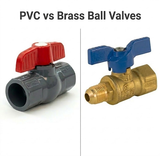
Choosing PVC vs Brass Ball Valves
When it comes to ball valves, there's no one-size-fits-all answer. PVC and brass are both excellent …
Read More
Agricultural Irrigation Maintenance Checklist
Here are some things to think about. If an agricultural irrigation pump has to work against just 5 p …
Read More
Agriculture Irrigation Valves: Efficient Flow Control for Farms
Agriculture irrigation valves are vital for efficient flow control, and valve selection is rarely ab …
Read More
Backflow Prevention Devices
According to the American Backflow Prevention Association, 24 gallons of asphalt emulsifier, intende …
Read More
Top 7 Swing Check Valves by Model & Manufacturer
Looking for reliable swing check valves? Discover the top 7 models from leading manufacturers like C …
Read More
What is a Spool Valve and How Does It Work?
Spool valves are incredibly useful. They are a simple directional control valve used in hydraulic an …
Read More
What is the cracking pressure of a check valve?
Check valves, regardless of their individual design, serve the specific purpose of permitting the fl …
Read More
Smart Water Valves: Futuristic Flow Control Technology
Leaks can range from annoying to devastating, and the longer they go unaddressed, the more costly th …
Read More
How to Calculate Flow Rate In Water Systems
Flow rate is critical in water systems, from simple home plumbing to complex industrial water system …
Read More
What Is a Valve Pressure Rating? Definition and Guide
Pressure ratings are important considerations when designing a system that uses valves, but they can …
Read More
Special Pricing and Services for OEM - the 91视频 Valve Store
OEMs or Original Equipment Manufacturers make up a large portion of our clients at 91视频. With th …
Read More
Data Cooling Centers and Sanitary Valves
Overheated data centers pose a massive challenge, and the global data center cooling market is growi …
Read More
Valve Maintenance Best Practice Guide
A Guide to Safer, Long Lasting Valves Valves are found in most piped systems that move liquids, gas, …
Read More
Valve Materials for Gaseous Oxygen Service
Oxygen may seem safe because it is colorless, tasteless, and odorless, but in the wrong conditions, …
Read More
Pneumatic Actuators Valve Types
Have you ever stopped to think about what makes an automated assembly line push, pull, lift, and rot …
Read More