
 888-825-8800




Most ball valves are simple by design; in fact, that's one of their main selling points. Our aim here is to provide a quick breakdown of various ball valve types, from standard ball valves to trunnion mounted, from cavity filled to vented balls, and everything in between.
Key Points
- Ball Valve Configurations: Ball valves come in different port and body configurations. Examples include 2 way and 3 way ball valves; along with one-piece, two-piece, and three-piece designs. Each type varies in construction, ease of maintenance, and installation requirements, suiting different application needs.
- Advancements in Materials: Recent innovations include the use of corrosion resistant materials and new design features for better maintenance, improved valve functionality and lifespan.
- Operational Efficiency: Key to ball valve performance is the valve body design and ball mounting mechanism, ensuring smooth flow, minimal pressure loss, and reliable shut-off in diverse conditions.
- Automation Compatibility: Modern ball valves often include actuator mounting pads compliant with ISO-5211, enabling easy integration with automation systems for advanced flow control requirements.
Ball Valve Types: Full Port vs. Reduced Port Ball Valves
When it comes to ball valves, the distinction between full port and reduced port is commonly overlooked. A full port ball valve has an internal diameter that matches the pipeline diameter. For example, a 3/4” full port ball valve has the same internal diameter as a 3/4” pipe, ensuring free, unobstructed flow.
Conversely, a reduced port ball valve - also known as a standard port valve - features a smaller internal diameter than the nominal valve size, resulting in a restricted flow path. This variance is especially notable in large bore applications, where the cost-effectiveness of reduced port ball valves can be beneficial. An 8” reduced port ball valve, for example, matches the diameter of a 6” pipe, offering a budget-friendly alternative to a full port valve of the same size.
1 Piece, 2 Piece, and 3 Piece Ball Valves: Comparing Configurations
Ball valves are classified based on their construction into one-piece, two-piece, and three-piece designs, each offering distinct features and suited for various applications.
One Piece Ball Valves
These valves are known for their compact design and cost-effectiveness. Made from a single piece of material or casting which encases the ball within, one-piece valves are ideal for moderate, less demanding applications. However, their singular construction means that if maintenance or repair is required, the whole valve often needs replacement.
Two Piece Ball Valves
Offering a balance between durability and ease of maintenance, two-piece valves consist of two separate sections. This design allows for easier access to internal parts than one-piece valves, making them suitable for a broader range of applications, and allowing for valve maintenance.
Three Piece Ball Valves
Known for their solid construction, 3-piece valves feature a central section that houses the ball, stem, and seat, flanked by two end sections with various connection options (including flange, threaded, or weld ends). This configuration facilitates not only easier installation but also simpler maintenance and repair. While initially more costly, especially for high-pressure ratings (like 1000# or 2000#), their long-term reliability and ease of servicing can offset the upfront investment compared to cheaper, less robust valves.
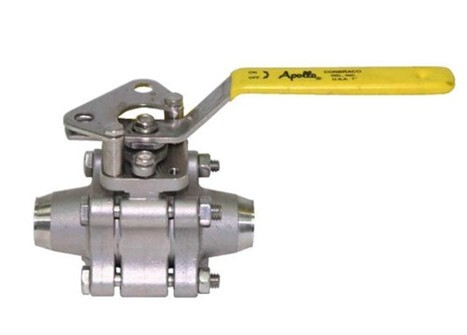
3 Piece Stainless Steel Ball Valve
Each type, from the simple and economical one-piece valve to the versatile two-piece and the highly durable three-piece, offers unique advantages.
Ball Valve Selection and Automation
For future plant upgrades, especially when it comes to control and automation, selecting ball valves with actuator mounting pads is advisable. Compliance with the ISO-5211 standard is an important factor, as it ensures uniformity in mounting dimensions. This enables better integration of automation systems and is a critical consideration for applications requiring advanced flow control.
Innovations in Ball Valve Design and Materials
Recent advancements in ball valve design and materials have greatly improved their functionality in many cases. One development worth mentioning is the improvement of the split body design, which provides easier maintenance and inspection while also providing a more secure seal. This design has proven particularly useful in applications where reliability and ease of repair are a priority.
Material innovation - especially the widespread adoption of stainless steel alloys in many ball valves - could also be described as an improvement. Stainless steel offers superior resistance to corrosion and wear, making it ideal for a wide range of applications, including harsh chemical environments and high-pressure situations (stainless steel high-pressure ball valves, in particular, have proven quite popular in recent years).
Flow Control and Valve Body Mechanics
Ball valve bodies are engineered to facilitate an even, smooth flow profile: the idea is to reduce turbulence while minimizing pressure drop across the valve.
Closed position functionality in ball valves is important for effective shut-off applications, as this feature ensures a tight seal when the valve is not in use, preventing leaks and maintaining system integrity. In high-pressure scenarios, the reliability of the closure mechanism is important for safety and operational reliability and consistency.
Floating ball designs have almost revolutionized how ball valves work. The floating ball, which is held in place by compression of the upstream and downstream seats, is designed to adjust under pressure to provide a reliable seal. This design is effective in managing fluid flow in dynamic conditions, ensuring not only precision, but also responsiveness. The evolution of floating ball designs has led to a more balanced pressure distribution across floating ball valves, improving their general sealing capability and overall operational life.
V-port ball valves, also called segmented ball valves, are specialized ball valves designed for flow control applications. These valves possess a unique design, with a V-notch or similar contoured shape on the ball. This feature gives V-port ball valves an equal percentage flow characteristic, which allows for stable and precise flow control.
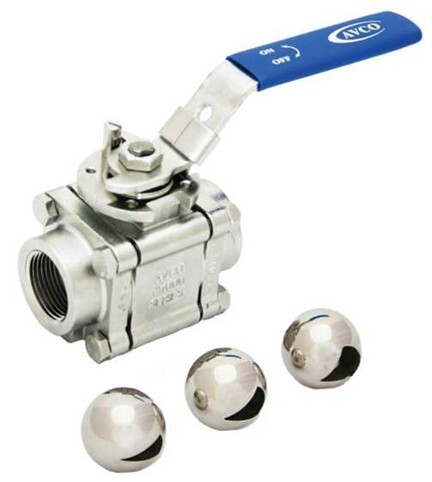
V-port Ball Valve
Trunnion Ball Valves: Design Features and Suitable Applications
Trunnion ball valves use a solid ball with supporting trunnions mounted at the bottom and top. This structure is particularly effective for high pressure and large diameter valves, as the trunnion bears the pressure load, minimizing stress on the ball and seats.
The main distinction between standard (i.e. floating ball) and trunnion designs lie in their suitability for different applications. Standard ball valves, with the ball held in place by seat compression, are ideal for lower pressure and small bore operations. Their simplicity and cost-effectiveness make them a preferred choice in less demanding conditions.
Trunnion mounted ball valves, however, shine in more challenging environments. Their robust construction is tailored for larger sizes and higher-pressure applications, where they provide reliable performance over an extended service life. The trunnion support reduces the torque required to operate the valve, making it easier to operate under high pressure.
Trunnion valves are often the preferred choice in the oil and gas industry, where high pressure and large pipe diameters are common. Their reliable performance under stress makes them suitable for critical safety applications. Conversely, floating ball valves are commonly used in residential and light commercial applications, where ease of operation and upfront cost are more important than the ability to handle extreme conditions.
Ball Valve Variations: Soft vs. Metal Seated
Soft Seated Ball Valves
Featuring seats made of materials like PTFE or other soft polymers, these valves are renowned for providing excellent sealing capabilities, particularly in low-pressure applications. Their primary advantage lies in the ability to create a tighter seal compared to metal seats, although they are typically less resistant to high temperatures and abrasive materials.
Metal Seated Ball Valves
For higher temperature applications and situations involving abrasive or corrosive fluids, metal seated ball valves are often the better choice. While they may not seal as tightly as their soft-seated counterparts, their ability to work well in harsh conditions makes them the preferred option in certain applications.
Ball Valve Options
Lever vs. Handwheel
The operational mechanism of ball valves also varies. Lever-operated ball valves offer a simple quarter-turn function, which is ideal for quick and easy control, typically seen in lower pressure systems. Handwheel-operated valves, on the other hand, are suited for applications requiring more precise control, particularly in high-pressure environments. Actuators offer another solution, these may be supplied in electrical, pneumatic or hydraulic options.
Vented Ball Valves
Vented ball valves are designed with safety in mind, featuring a vent that prevents pressure build-up within the valve, making them an essential choice for high-risk applications such as steam and cryogenic valves.
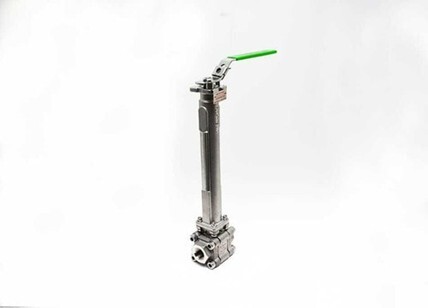
Vented Ball Valve
Optional Extras and Features
Ball valves may be specified with a range of optional features and accessories. These include cavity filled seats, blow-out proof stems, fire safe designs, locking and tamper-proof attachments, various actuation options, sanitary designs, a broad range of port configurations and end connections, and many materials of construction like brass, bronze, carbon steel and stainless steel to choose from.
Our Posts
View All
Industrial Valves Used in Water Treatment Plants
Water treatment valves control flow rate, pressure, and direction of fluid flow in drinking water …
Read More
Industrial Control Valves: The Ultimate Guide for Engineers
Image courtesy of By Bitjungle - Own work, CC BY-SA 4.0 Precision flow control is vital to modern in …
Read More
What Are ANSI Standards for Valves and Are They Mandatory?
(And Why They Matter for Valve Systems) Whether you鈥檙e specifying valves for an oil refinery, water …
Read More
ASME Standards for Valves Explained: ASME vs. ANSI
On This Page What Is ASME? What Are Standards and Codes? Why ASME Standards Matter Key ASME Standa …
Read More
OSHA Pressure Relief Valve Regulations
OSHA pressure relief valve (PRV) regulations are extremely important for the safety of both your emp …
Read More
Choosing PVC vs Brass Ball Valves
When it comes to ball valves, there's no one-size-fits-all answer. PVC and brass are both excellent …
Read More
Agricultural Irrigation Maintenance Checklist
Here are some things to think about. If an agricultural irrigation pump has to work against just 5 p …
Read More
Agriculture Irrigation Valves: Efficient Flow Control for Farms
Agriculture irrigation valves are vital for efficient flow control, and valve selection is rarely ab …
Read More
Backflow Prevention Devices
According to the American Backflow Prevention Association, 24 gallons of asphalt emulsifier, intende …
Read More
Top 7 Swing Check Valves by Model & Manufacturer
Looking for reliable swing check valves? Discover the top 7 models from leading manufacturers like C …
Read More
What is a Spool Valve and How Does It Work?
Spool valves are incredibly useful. They are a simple directional control valve used in hydraulic an …
Read More
What is the cracking pressure of a check valve?
Check valves, regardless of their individual design, serve the specific purpose of permitting the fl …
Read More
Smart Water Valves: Futuristic Flow Control Technology
Leaks can range from annoying to devastating, and the longer they go unaddressed, the more costly th …
Read More
How to Calculate Flow Rate In Water Systems
Flow rate is critical in water systems, from simple home plumbing to complex industrial water system …
Read More
What Is a Valve Pressure Rating? Definition and Guide
Pressure ratings are important considerations when designing a system that uses valves, but they can …
Read More
Special Pricing and Services for OEM - the 91视频 Valve Store
OEMs or Original Equipment Manufacturers make up a large portion of our clients at 91视频. With th …
Read More
Data Cooling Centers and Sanitary Valves
Overheated data centers pose a massive challenge, and the global data center cooling market is growi …
Read More
Valve Maintenance Best Practice Guide
A Guide to Safer, Long Lasting Valves Valves are found in most piped systems that move liquids, gas, …
Read More
Valve Materials for Gaseous Oxygen Service
Oxygen may seem safe because it is colorless, tasteless, and odorless, but in the wrong conditions, …
Read More
Pneumatic Actuators Valve Types
Have you ever stopped to think about what makes an automated assembly line push, pull, lift, and rot …
Read More